Pediatric Complex Biventricular Repair Program

Outcomes
We are one of the few programs nationwide offering complex biventricular repair, with a 98% success rate, 100% survival and a median hospital stay of just 11 days.

Advanced Imaging
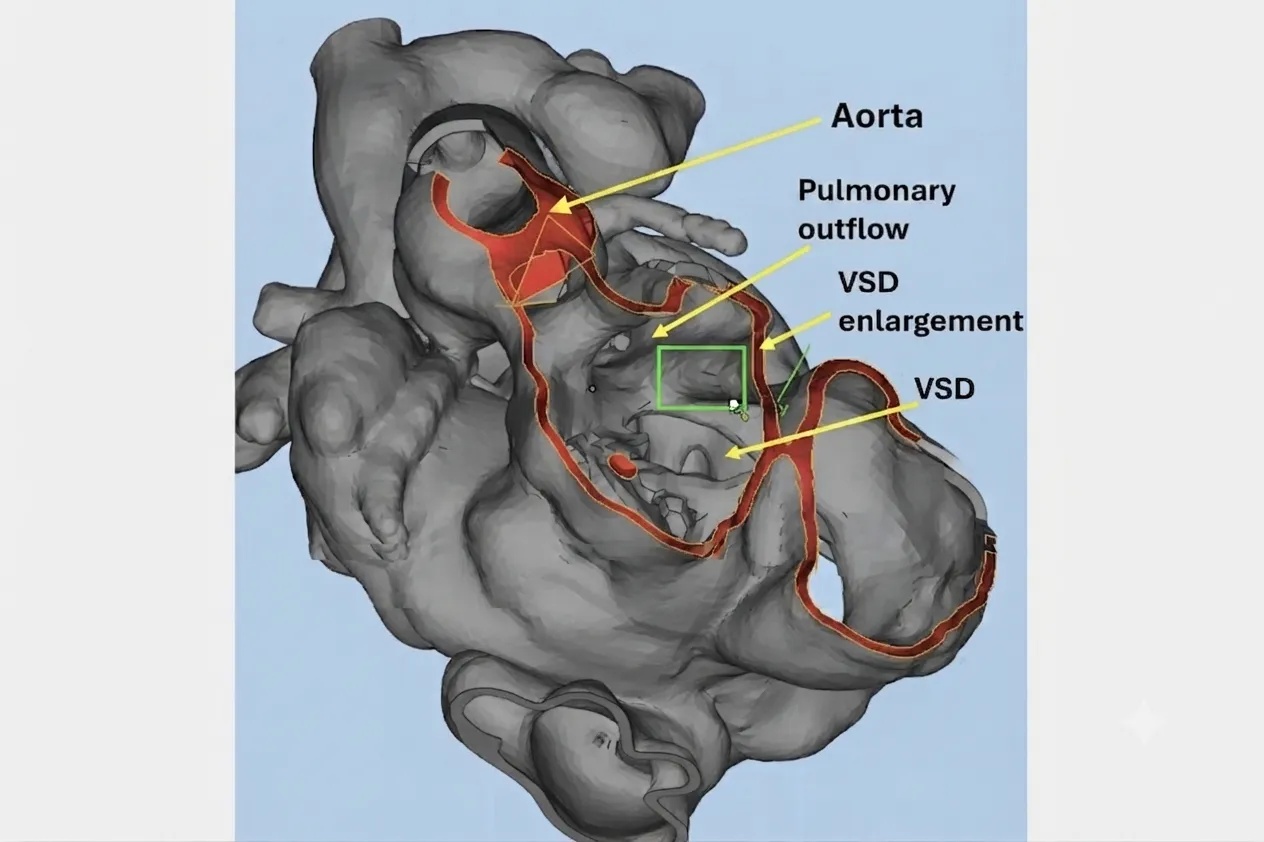
Advanced imaging and specialized 3D heart modeling allow our team to fully understand your child’s heart, plan complex or staged repairs when needed and outline a personalized care plan before surgery.
Patient Testimonial (Carter)
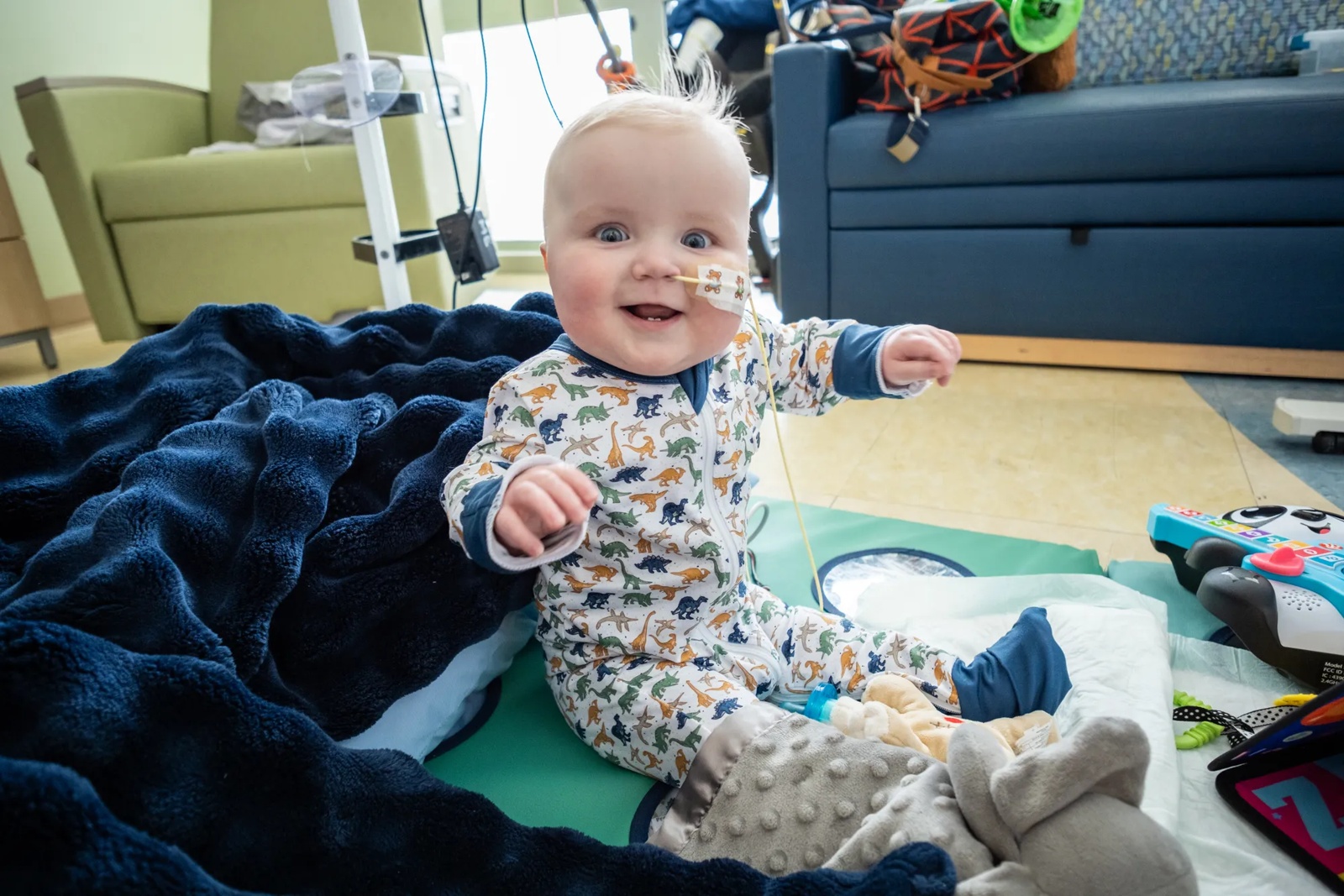
“The Biventricular Repair team at Children’s Health, led by Dr. Andersen, has been nothing short of extraordinary. Our son has undergone multiple surgeries, including two open-heart procedures as part of the first phase of his biventricular repair. It was the most overwhelming and frightening time of our lives, but we always knew he was in the very best hands.”
nationally ranked care, close to home
Meet the care team
Conditions We Treat
Pediatric aortic stenosis
Heterotaxy syndrome
Hypoplastic left heart syndrome (HLHS)
Single ventricle defects
Transposition of the great arteries
Tricuspid atresia
Aortic atresia
Borderline left ventricle
Borderline right ventricle
Cardiac tumors
Congenitally corrected transposition of the great arteries (cc-TGA)
Criss-cross hearts
Double inlet left ventricle
Double outlet right ventricle (DORV)
Ebstein’s anomaly
Pulmonary atresia with an intact ventricular septum (PA/IVS)
Straddling atrioventricular valves
Unbalanced atrioventricular canal (AVC, AVSD)
More Details
About the Complex Biventricular Repair Program
The Complex Biventricular Repair Program offers specialized care for children with severe congenital heart defects. Traditionally, some of these children needed a heart transplant or a single ventricle repair, which only restores one pumping chamber. While helpful, this approach can lead to poor circulation and long-term complications. For children whose anatomy allows, restoring two-ventricle circulation has important long-term advantages. Our program focuses on identifying these candidates, sometimes in cases where biventricular repair was not initially considered, and performing these complex repairs with a coordinated team approach.
Who We Evaluate:
Any patient seeking a second opinion regarding candidacy for two-ventricle circulation
Patients do best with complete repairs within the first two to three years of life
Fetal patients are welcomed and preferred; if possible, early intervention matters
Process After a Patient Is Referred:
Clinical data is reviewed by our multidisciplinary team
Advanced imaging is typically recommended to model cardiac anatomy and obtain volumetric and physiologic data
Some patients benefit from a staged approach to facilitate a successful complete repair
A custom care plan is developed and shared with the family and referring provider before surgery
What makes our approach Unique:
Our multidisciplinary clinical team works together to deliver comprehensive care with outstanding outcomes. With regular cross-specialty planning, our coordinated team approach provides your patient with all the care they need in one place. But none of this would be possible without the support of our additional Children’s Health team members who provide exceptional care coordination, monitoring, follow-up and development efforts.
Expert approach
Two board-certified attending cardiothoracic surgeons collaborate on every case
Cardiac imaging specialists with expertise in advanced 3D and 4D modeling
Interventional cardiologists with expertise in hemodynamic assessment, catheter-based therapy and intervention
Dedicated cardiac ICU specialists with expertise in complex post-operative care
Heart failure specialists with expertise in complex congenital disease
Comprehensive support
Advanced Practice Providers for interstage monitoring and collaboration with primary cardiology team
Dedicated heterotaxy program experts
Long-term cardiac neurodevelopment experts who follow up with your patients
Dedicated biventricular repair advanced practice provider accessible to families and as a provider liaison
Recent Publications
Doctor P, Islam IS, Ikemba CM, Fares M, Moore J, Sturgeon G, Jaquiss RD, Andersen ND. Three-Dimensional Imaging Defines Straddling Mitral Valve Anatomy to Allow Successful Biventricular Repair. World J Pediatr Congenit Heart Surg. Published online: Nov 22, 2024. PMID: 39574292.
Islam IS, O’Donnell AP, Blalock S, Fares M, Ahmed MI, Davies RR, Andersen ND. Technique for staged biventricular repair of heterotaxy, double outlet right ventricle, unbalanced atrioventricular canal defect, and transposition. JTCVS Tech. 2024 Sep 17:28:112-114. PMID: 39669327. PMCID: PMC11632339.
Patil S, Zia A, Fuller J, Billa R, Goss K, Andersen ND, Griffiths M. Complications of Pulmonary Embolism in a Pediatric Patient. JACC Case Rep. 2025 Feb 5;30(3):103221. PMID: 39963205. PMCID: PMC11830248.
Erdem S, Fares M, Murguia F, Moore J, Sturgeon G, Ikemba CM, Greil G, Hussain T, Andersen ND, Zou Q. Using Multimodality Imaging and 3-Dimensional Printed Models to Guide Decision-Making for Complex Congenital Biventricular Repair. JACC Case Rep. 2025 Jun 25;30(16):103884. PMID: 4057909.
Islam IS, Laird P, Fares M, Lemler M, Sebastian R, Jaquiss R, Andersen ND. Staged right ventricular recruitment of unbalanced atrioventricular septal defect. JTCVS Tech. 2025 Jun 11;32:108-110. PMID: 40814662. PMCID: PMC12347748.
Murguia LF, Ossa-Galvis M, Gaitonde M, Fares M, Gaur L, Andersen N, Ikemba C. Redefining Biventricular Repair Feasibility in Prenatal Counseling: A Review of Fetal Echocardiograms in Patients Selected for Complex Biventricular Repair. Pediatr Cardiol. 2025 Aug 21. Online ahead of print. PMID: 40841471.
Ramdat Misier NL, Andersen ND, Werner D, Weinreb SJ, Lemler MS, Fares M, Sharma K, Kenny MD, de Groot NMS, Nguyen HH. Preoperative transcatheter conduction system mapping to avoid conduction injury during complex congenital heart surgery. JTCVS Tech. 2025 Dec 11;35:102180. PMID: 41658907. PMCID: PMC12881807.
Islam IS, McGetrick ME, Leon RL, Reyes K, Davies RR, Jaquiss RDB, Andersen ND. Results of a Preoperative Screening Brain Magnetic Resonance Imaging Protocol in Neonates Undergoing Cardiopulmonary Bypass. Ann Thorac Surg. 2026 Mar 18. Online ahead of print.
Kenny MD, Mehdi MQ, Magalhaes-Juarez C, Laird P, Ullah S, Lemler MS, Jaquiss RD, Davies RR, Andersen ND. Staged Double Switch Repair of a Complex Atrioventricular Canal Defect with Dextrocardia and Double Outlet Left Atrium. Ann Thorac Surg. IN PRESS.
Magalhaes-Juarez C, Islam IS, Kenny MD, Lemler MS, Patrick JM, Reyes KM, Jaquiss RD, Davies RR, Andersen ND. A Comparison of the Burden of Post-Operative Recovery Between Complex Biventricular Repair and Fontan operations. Ann Thorac Surg. IN PRESS.